



 Germany
 Japan
Japan
 United Kingdom
 China
China
VDAC1 Rabbit Polyclonal Antibody
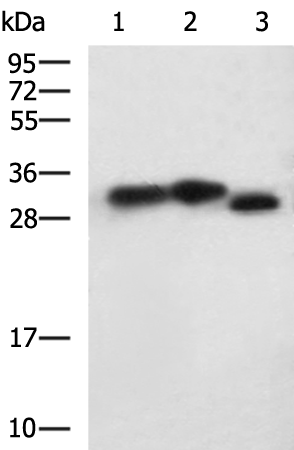
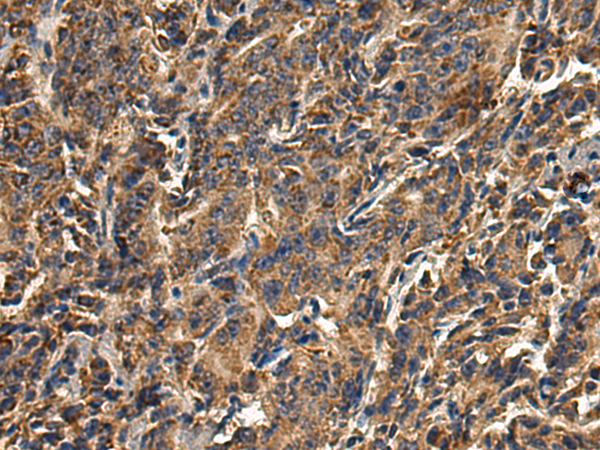

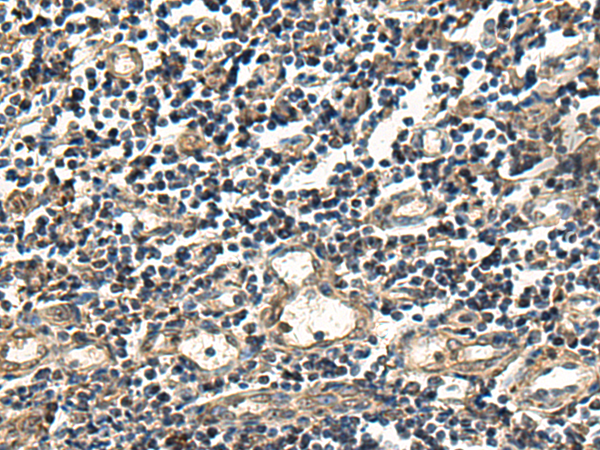
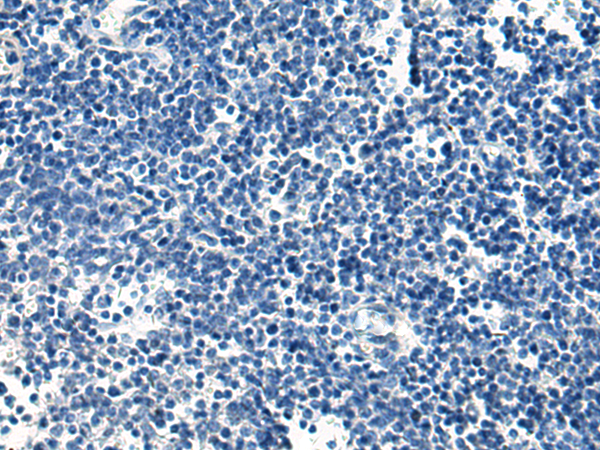
Other products for "VDAC1"
Specifications
| Product Data | |
| Applications | IHC, WB |
| Recommended Dilution | WB: 1000-5000 WB positive control: Jurkat cell, 293T cell, Mouse kidney tissue lysates IHC: 150-300 Positive control: Human prostate cancer Predicted cell location: Cytoplasm |
| Reactivities | Human, Mouse, Rat |
| Host | Rabbit |
| Isotype | IgG |
| Clonality | Polyclonal |
| Immunogen | Fusion protein of human VDAC1 |
| Formulation | pH7.4 PBS, 0.05% NaN3, 40% Glycerol |
| Concentration | lot specific |
| Purification | Antigen affinity purification |
| Conjugation | Unconjugated |
| Storage | Store at -20°C. |
| Stability | 1 year |
| Predicted Protein Size | 31 kDa |
| Database Link | |
| Background | Voltage-dependent anion channel (VDAC), ubiquitously expressed and located in the outer mitochondrial membrane, is generally thought to be the primary means by which metabolites diffuse in and out of the mitochondria. In addition, this channel plays a role in apoptotic signaling. The change in mitochondrial permeability characteristic of apoptosis is mediated by Bcl-2 family proteins, which bind to VDAC, altering the channel kinetics. Homodimerization of VDAC may be a mechanism for changing mitochondrial permeability and supporting release of cytochrome c. In mammalian cells, there are three VDAC isoforms, VDAC1, which is the most widely expressed isoform, as well as VDAC2 and VDAC3. |
| Reference Data | |
Documents
| Product Manuals |
| FAQs |
| SDS |
{0} Product Review(s)
0 Product Review(s)
Submit review
Be the first one to submit a review



Product Citations
*Delivery time may vary from web posted schedule. Occasional delays may occur due to unforeseen
complexities in the preparation of your product. International customers may expect an additional 1-2 weeks
in shipping.