



 Germany
 Japan
Japan
 United Kingdom
 China
China
Pml Mouse Monoclonal Antibody [Clone ID: 36-1-104]
Product Images
Other products for "Pml"
Specifications
| Product Data | |
| Clone Name | 36-1-104 |
| Applications | IF, IP, WB |
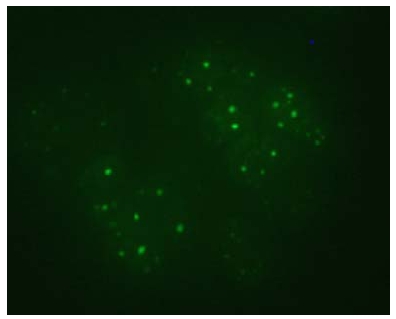
| Recommended Dilution | Western blotting: 1.0 µg/ml for chemiluminescence detection system. Immunocytochemistry: 1.0 µg/ml. Immunoprecipitation. Detailed procedure is provided in Protocols. |
| Reactivities | Mouse |
| Host | Mouse |
| Isotype | IgG2b |
| Clonality | Monoclonal |
| Immunogen | Recombinant full-length Mouse PML. |
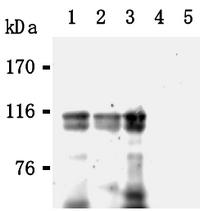
| Specificity | This antibody reacts with Mouse PML (90-106 kDa) on Western blotting. |
| Formulation | PBS, pH 7.2 containing 50% Glycerol without preservatives. State: Azide Free State: Liquid purified IgG fraction of hybridoma supernatant |
| Concentration | 1.0 mg/ml |
| Purification | Protein-A Agarose Chromatography |
| Gene Name | Mus musculus promyelocytic leukemia (Pml), transcript variant 1 |
| Database Link | |
| Background | PML (promyelocytic leukemia) protein is a tripartite motif (TRIM)-containing nuclear phosphoprotein that functions as a transcription factor, a coactivator of nuclear receptors, a regulator of apoptosis, and as a growth and tumor suppressor. PML is localized to the nucleoplasm in distinct subnuclear structures referred to as Promyelocytic Leukemia Bodies (also known as Nuclear Domain 10). At least 14 splice variants of PML ranging in molecular weight from 48-97 kDa have been described. All isoforms of PML contain an identical N-terminus but vary in the C-terminal portion of the protein. PML is frequently overexpressed in Hodgkin’s and Reed-Sternberg cells of Hodgkin’s disease. PML is useful in studying acute promyelocytic leukemia which is characterized by fusion of PML and Retinoic Acid Receptor-alpha genes. The fusion protein blocks the terminal differentiation of hematopoietic cells and apoptosis. |
| Synonyms | RING finger protein 71, MYL, TRIM19 |
| Note | This product was originally produced by MBL International. Protocol: SDS-PAGE & Western Blotting: 1) Wash the cells 3 times with PBS and suspend with 10 volumes of cold Lysis buffer (50 mM Tris-HCl, pH 7.2, 250 mM NaCl, 0.1% NP-40, 2 mM EDTA, 10% glycerol) containing appropriate protease inhibitors. Incubate it at 4°C with rotating for 30 minutes, then sonicate briefly (up to 10 seconds). 2) Centrifuge the tube at 12,000 x g for 10 minutes at 4°C and transfer the supernatant to another tube. Measure the protein concentration of the supernatant and add the cold Lysis buffer to make an 8 mg/mL solution. 3) Mix the sample with equal volume of Laemmli’s sample buffer. 4) Boil the samples for 2 minutes and centrifuge. Load 10 µL of the sample per lane in a 1 mm thick SDS-polyacrylamide gel for electrophoresis. 5) Blot the protein to a polyvinylidene difluoride (PVDF) membrane at 1 mA/cm2 for 1 hour in a semi-dry transfer system (Transfer Buffer: 25 mM Tris, 190 mM glycine, 20% MeOH). See the manufacture's manual for precise transfer procedure. 6) To reduce nonspecific binding, soak the membrane in 10% skimmed milk (in PBS, pH 7.2) for 1 hour at RT, or overnight at 4°C. 7) Incubate the membrane with primary antibody diluted with PBS, pH 7.2 containing 1% skimmed milk as suggested in the APPLICATIONS for 1 hour at room temperature. (The optimal antibody concentration will depend on the experimental conditions.) 8) Wash the membrane with PBS (5 minutes x 3 times). 9) Incubate the membrane with the 1/10,000 HRP-conjugated anti-Mouse IgG diluted with 1% skimmed milk (in PBS, pH 7.2) for 1 hour at RT. 10) Wash the membrane with PBS (5 minutes x 3 times). 11) Wipe excess buffer from the membrane, then incubate it with appropriate chemiluminescence reagents for 1 minute. Remove extra reagent from the membrane by dabbing with a paper towel, and seal it in plastic wrap. 12) Expose to an X-ray film in a dark room for 5 minutes. 13. Develop the film as usual. The conditions for exposure and development may vary. Positive Controls: Ba/F3, WR19L, P19. Immunocytochemistry: 1) Culture the cells in the appropriate condition on a glass slide (for example, spread 10e4 of HEp-II cells for one slide, then incubate in a CO2 incubator for one night.) 2) Wash the cells 3 times with PBS. 3) Fix the cells by immersing the slide in PBS containing 4% paraformaldehyde for 20 minutes at RT. 4) The glass slide was washed 3 times with PBS. 5) Immerse the slide in PBS containing 0.1% Triton X-100 for 20 minutes at room temperature. 6) The glass slide was washed 3 times with PBS. 7) Add the primary antibody diluted with PBS as suggest in the APPLICATIONS onto the cells and incubate for 1 hour at RT. (Optimization of antibody concentration or incubation condition are recommended if necessary.) 8) The glass slide was washed 3 times with PBS. 9) Add 100 µL of 1:100 FITC conjugated anti-Mouse IgG) diluted with PBS onto the cells. Incubate for 20 minutes at RT. Keep out light by aluminum foil. 10) The glass slide was washed 3 times with PBS. 11) Wipe excess liquid from slide but take care not to touch the cells. Never leave the cells to dry. 12) Promptly add mounting medium onto the slide, then put a cover slip on it. Positive Control: P19 |
| Reference Data | |
Documents
| Product Manuals |
| FAQs |
| SDS |
{0} Product Review(s)
0 Product Review(s)
Submit review
Be the first one to submit a review



Product Citations
*Delivery time may vary from web posted schedule. Occasional delays may occur due to unforeseen
complexities in the preparation of your product. International customers may expect an additional 1-2 weeks
in shipping.