



 Germany
 Japan
Japan
 United Kingdom
 China
China
PAK1 Rabbit Polyclonal Antibody
Product Images
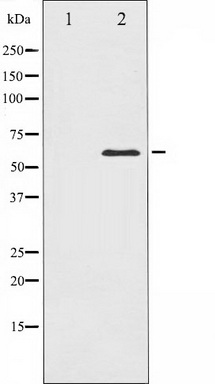
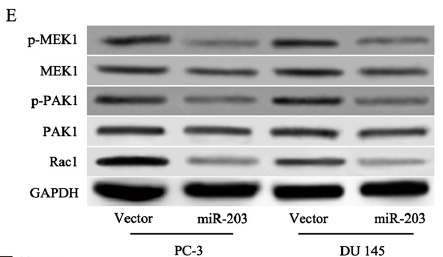
Other products for "PAK1"
Specifications
| Product Data | |
| Applications | WB |
| Recommended Dilution | WB: 1:500-1:2000; IHC: 1:50-1:200; IF/ICC: 1:100-1:500 |
| Reactivities | Human, Mouse, Rat |
| Host | Rabbit |
| Isotype | IgG |
| Clonality | Polyclonal |
| Immunogen | The antiserum was produced against A synthesized peptide derived from human PAK1 |
| Formulation | Rabbit IgG in phosphate buffered saline , pH 7.4, 150mM NaCl, 0.02% sodium azide and 50% glycerol. |
| Concentration | lot specific |
| Purification | The antibody was affinity-purified from rabbit antiserum by affinity-chromatography using epitope-specific peptide. |
| Conjugation | Unconjugated |
| Storage | Store at -20°C as received. |
| Stability | Stable for 12 months from date of receipt. |
| Predicted Protein Size | 60 kDa |
| Gene Name | p21 (RAC1) activated kinase 1 |
| Database Link | |
| Background | PAK proteins are critical effectors that link RhoGTPases to cytoskeleton reorganization and nuclear signaling. PAK proteins, a family of serine/threonine p21-activating kinases, include PAK1, PAK2, PAK3 and PAK4. |
| Synonyms | PAKalpha |
| Reference Data | |
| Protein Families | Druggable Genome, Protein Kinase, Stem cell - Pluripotency |
| Protein Pathways | Axon guidance, Chemokine signaling pathway, Epithelial cell signaling in Helicobacter pylori infection, ErbB signaling pathway, Fc gamma R-mediated phagocytosis, Focal adhesion, MAPK signaling pathway, Natural killer cell mediated cytotoxicity, Regulation of actin cytoskeleton, Renal cell carcinoma, T cell receptor signaling pathway |
Documents
| Product Manuals |
| FAQs |
{0} Product Review(s)
0 Product Review(s)
Submit review
Be the first one to submit a review



Product Citations
*Delivery time may vary from web posted schedule. Occasional delays may occur due to unforeseen
complexities in the preparation of your product. International customers may expect an additional 1-2 weeks
in shipping.