



 Germany
 Japan
Japan
 United Kingdom
 China
China
APMAP Rabbit Polyclonal Antibody
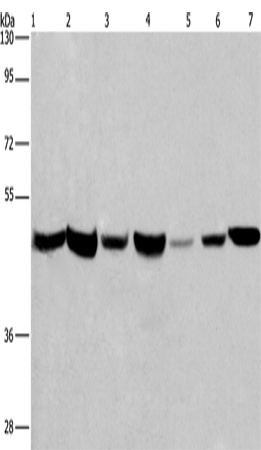
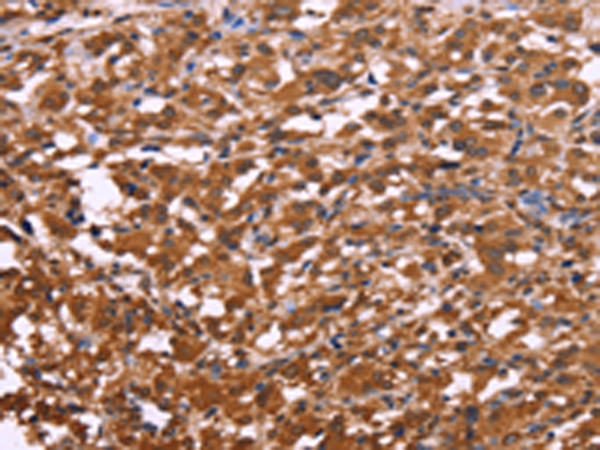
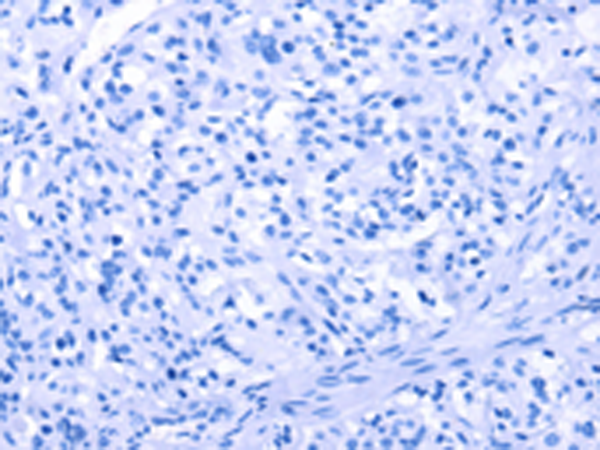
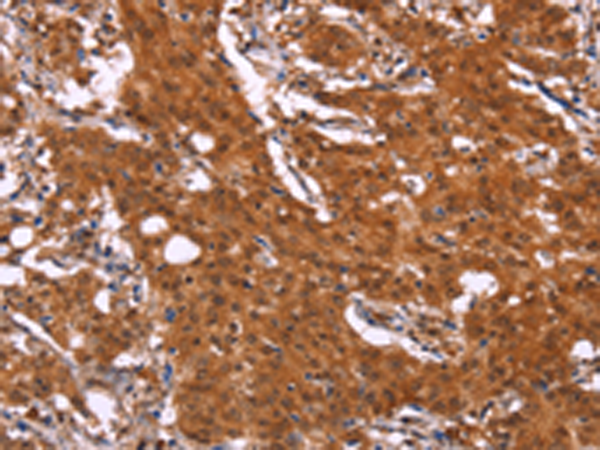
Other products for "APMAP"
Specifications
| Product Data | |
| Applications | IHC, WB |
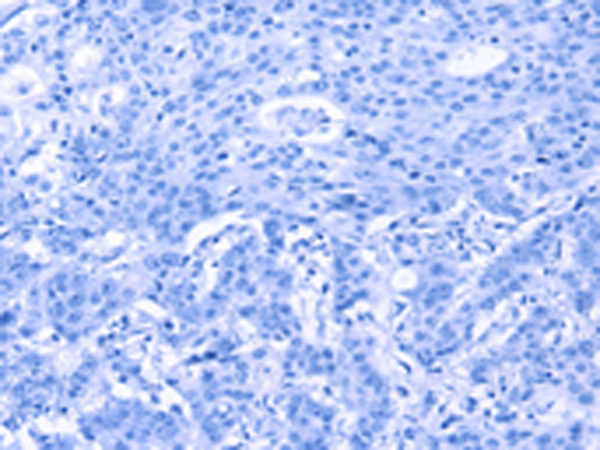
| Recommended Dilution | WB: 500-2000 WB positive control: Human placenta and fetal liver tissue, PC3, 231, Hela, HepG2 and A549 cells IHC: 50-200 Positive control: Human thyroid cancer Predicted cell location: Cytoplasm |
| Reactivities | Human |
| Host | Rabbit |
| Isotype | IgG |
| Clonality | Polyclonal |
| Immunogen | Synthetic peptide of human APMAP |
| Formulation | pH7.4 PBS, 0.05% NaN3, 40% Glyceroln |
| Concentration | lot specific |
| Purification | Antigen affinity purification |
| Conjugation | Unconjugated |
| Storage | Store at -20°C as received. |
| Stability | Stable for 12 months from date of receipt. |
| Predicted Protein Size | 46 kDa |
| Gene Name | adipocyte plasma membrane associated protein |
| Database Link | |
| Background | C20orf3, also known as APMAP (adipocyte plasma membrane-associated protein), is a 416 amino acid single-pass type II membrane protein that belongs to the strictosidine synthase family and is thought to play a role in adipocyte differentiation. The gene encoding C20orf3 maps to human chromosome 20, which houses over 600 genes some of which are associated with Creutzfeldt-Jakob disease, amyotrophic lateral sclerosis, spinal muscular atrophy, ring chromosome 20 epilepsy syndrome and Alagille syndrome. Additionally, chromosome 20 contains a region with numerous genes which are thought important for seminal production and may be potential targets for male contraception |
| Synonyms | BSCv; C20orf3 |
| Reference Data | |
| Protein Families | Transmembrane |
Documents
| Product Manuals |
| FAQs |
{0} Product Review(s)
0 Product Review(s)
Submit review
Be the first one to submit a review



Product Citations
*Delivery time may vary from web posted schedule. Occasional delays may occur due to unforeseen
complexities in the preparation of your product. International customers may expect an additional 1-2 weeks
in shipping.