



 Germany
 Japan
Japan
 United Kingdom
 China
China
beta Catenin (CTNNB1) Rabbit Polyclonal Antibody
Product Images
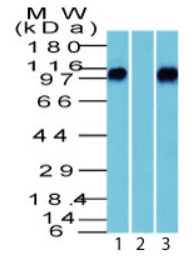
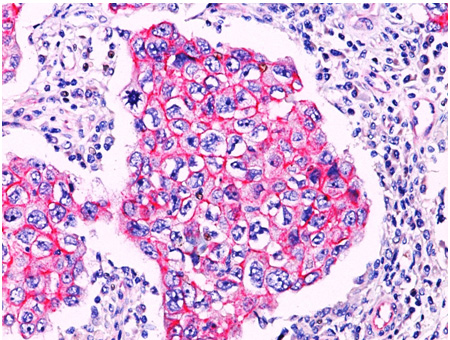
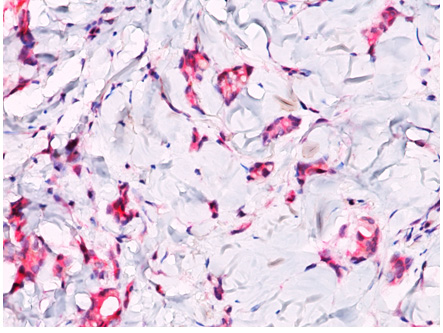
Other products for "CTNNB1"
Specifications
| Product Data | |
| Applications | FC, IF, IHC, IP, WB |
| Recommended Dilution | Western Blot: 0.5-5 µg/ml. Flow Cytometry: 0.5-1 µ/106 cells. Immunofluorescence: 1-2 µg/ml. Immunoprecipitation: 1-2 µg/500 µg protein lysate. Immunohistochemistry on Paraffin Sections: 1-2 µg/ml for 30 minutes at RT. Staining of formalin-fixed tissues requires boiling tissue sections in 1mM EDTA, pH 9.0, for 10-20 min followed by cooling at RT for 20 minutes. Positive Control: HeLa or MCF-7 cells, Breast carcinoma. |
| Reactivities | Human, Mouse |
| Host | Rabbit |
| Isotype | IgG |
| Clonality | Polyclonal |
| Immunogen | beta-specific amino acid sequence chosen from the middle of the beta Catenin (p120) protein. |
| Specificity | This antibody recognizes Human and Mouse Beta-Catenin. Other species not tested. Cellular Localization:Cell surface and cytoplasmic. |
| Formulation | 10mM PBS State: Purified State: Liquid purified IgG fraction from Serum Stabilizer: 0.05% BSA Preservative: 0.05% Sodium Azide |
| Concentration | lot specific |
| Purification | Protein A Chromatography |
| Storage | Store undiluted at 2-8°C. |
| Stability | Shelf life: one year from despatch. |
| Predicted Protein Size | 92 kDa |
| Gene Name | Homo sapiens catenin beta 1 (CTNNB1), transcript variant 2 |
| Database Link | |
| Background | Beta Catenin (p120), an adherens junction protein, was originally identified as a component of cell-cell adhesion structures. It interacts with the cytoplasmic domain of E-cadherin and links E-cadherin to alpha-catenin, which in turn mediates anchorage of the E-cadherin complex to the cortical actin cytoskeleton. Research shows that beta Catenin also binds to another cytoskeletal complex containing the adenomatous polyposis coli protein and microtubules, and interacts with several signaling pathways that include tyrosine kinases and phosphatases and Wnt/Wingless. Interplay between these cytoskeletal complexes and signaling pathways may regulate morphogenesis. Beta Catenin is expressed in several hair follicle cell types, basal and peripheral matrix cells, and cells of the outer and inner root sheats. A pathological role of beta Catenin has been identified in pilomatrixoma, medulloblastoma and tumor development. Immunostaining of beta Catenin and E-cadherin is helps in the accurate identification of ductal and lobular neoplasms, including a distinction between low-grade ductal carcinoma in situ (DCIS) and lobular carcinoma. Additionally, some rectal and gastric adenocarcinomas demonstrate diffuse cytoplasmic beta-catenin staining and a lack of membranous staining, mimicking the staining pattern observed with lobular breast carcinomas. |
| Synonyms | CTNNB1, CTNNB, Beta-catenin |
| Reference Data | |
| Protein Families | Druggable Genome, ES Cell Differentiation/IPS, Transcription Factors |
| Protein Pathways | Adherens junction, Arrhythmogenic right ventricular cardiomyopathy (ARVC), Basal cell carcinoma, Colorectal cancer, Endometrial cancer, Focal adhesion, Leukocyte transendothelial migration, Melanogenesis, Pathogenic Escherichia coli infection, Pathways in cancer, Prostate cancer, Thyroid cancer, Tight junction, Wnt signaling pathway |
Documents
| Product Manuals |
| FAQs |
{0} Product Review(s)
0 Product Review(s)
Submit review
Be the first one to submit a review



Product Citations
*Delivery time may vary from web posted schedule. Occasional delays may occur due to unforeseen
complexities in the preparation of your product. International customers may expect an additional 1-2 weeks
in shipping.